Launching today at 12PM, GST.

00:00:00

How to Build a Consistent Home Yoga Routine

VilaFebruary 22, 20266 min readPractice Tips
Woman rolling out a yoga mat in a calm, minimally decorated living room with soft morning light

You bought the mat. You downloaded the app. Maybe you even cleared a corner of your living room. But somehow, that home yoga routine you imagined hasn't quite materialized - or it lasted three days before life got in the way.

You're not alone. Building a consistent home practice is one of the most common challenges yoga students face. Without the structure of a scheduled class, it's easy to push your practice to "later" until later never comes. But here's the thing: home practice doesn't have to be long, intense, or perfect. It just has to happen.

Start Smaller Than You Think

The biggest mistake people make with home yoga is setting the bar too high. An hour-long session every morning sounds aspirational, but it's not sustainable for most people - especially at the beginning.

Instead, commit to 10 minutes. That's it. Ten minutes of mindful movement is infinitely more valuable than an hour-long session you never do. Once the habit is established, it naturally expands on its own.

Tie It to Something You Already Do

Habit stacking - attaching a new behavior to an existing one - is one of the most effective strategies for building routines. Instead of deciding to "do yoga sometime in the morning," be specific:

After I make my coffee, I roll out my mat. After I brush my teeth at night, I do five minutes of stretching. The specificity removes decision fatigue. You're not choosing whether to practice - you're following a sequence that's already in motion.

Create a Dedicated Space

You don't need a home studio. A mat-sized space near a window is enough. What matters is that the space is associated with your practice. Keep your mat unrolled if you can. Place it somewhere visible.

The visual cue of seeing your mat ready and waiting reduces the friction between thinking about practice and actually doing it. Out of sight really does mean out of mind.

Follow a Simple Structure

When you don't have a teacher guiding you, a basic framework prevents that "I don't know what to do" paralysis. Here's a simple home practice template:

  • 2 minutes - Seated breathing. Close your eyes, lengthen your spine, breathe slowly.
  • 3 minutes - Gentle warm-up. Cat-cow, neck rolls, seated twists.
  • 10 minutes - Main poses. Pick 4–5 poses that feel good and move through them slowly.
  • 3 minutes - Cool down. Forward fold, reclined twist, legs up the wall.
  • 2 minutes - Savasana. Lie still. Let your body absorb the practice.

Use Virtual Classes as a Bridge

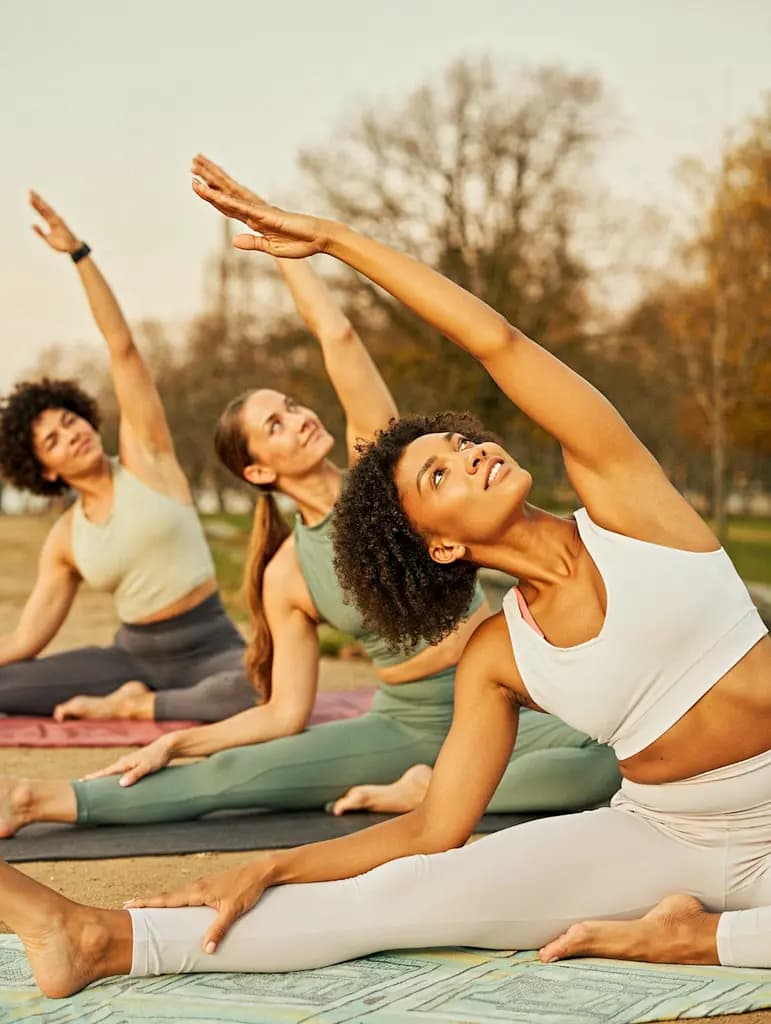
Home practice doesn't mean solo practice. Virtual classes give you the structure and guidance of a studio session from your living room. At Vila Ventures, our virtual sessions are designed specifically for this - they're intimate, interactive, and scheduled at times that work for busy professionals and parents in Abu Dhabi.

Think of virtual classes as the scaffolding for your home practice. They build your confidence, expand your pose vocabulary, and keep you accountable - all without leaving your house.

Track Progress Without Obsessing

A simple checkmark on a calendar can be surprisingly motivating. You're not tracking performance - you're tracking showing up. After a few weeks, seeing a streak of checkmarks creates its own momentum. You don't want to break the chain.

Avoid tracking things like flexibility gains or how long you held a pose. Those metrics invite comparison and self-judgment. The only metric that matters is: did I practice today?

Key Takeaways

  • Start with 10 minutes - consistency matters more than duration.
  • Attach your practice to an existing habit for automatic follow-through.
  • Keep your mat visible and your space ready to reduce friction.
  • Follow a simple structure so you never freeze up wondering what to do.
  • Virtual classes can bridge the gap between studio guidance and home independence.

Frequently Asked Questions

How long should a home yoga session be for beginners?

Start with 10–15 minutes. As the habit becomes natural, you'll find yourself wanting to extend it. Even 10 minutes of mindful practice delivers real benefits.

Do I need props for home yoga?

Not necessarily. A mat is helpful but not essential. Household items work well as substitutes - a folded blanket for a bolster, a belt for a strap, books stacked for a block.

What if I miss a day? Should I make up for it?

No. Missing a day is completely normal. Simply practice the next day as planned. Trying to compensate creates pressure that undermines the habit.

Vila

Founder & Yoga Instructor

Keep Reading

More stories you might enjoy

Get Started

Begin your journey to inner peace today!

Join us for mindful sessions that bring clarity, calm, inner balance, strength, and deep connection; one breath at a time.